
Superior hygiene standards
Our products are built to meet strict hygiene standards. Their smooth surfaces and sanitary seals minimize the risk of product contamination, ensuring the integrity and safety of the fluid being processed.
Traceability
It's important to have complete traceability (the ability to track a product's history, origin, materials, and movement throughout its lifecycle) of all components, including valves.
Our factory
Our company has a workshop area of 50,00 square meters and more than 100 employees. In our locations, there are many mature parts supply chains and experienced employees, which makes us unique.
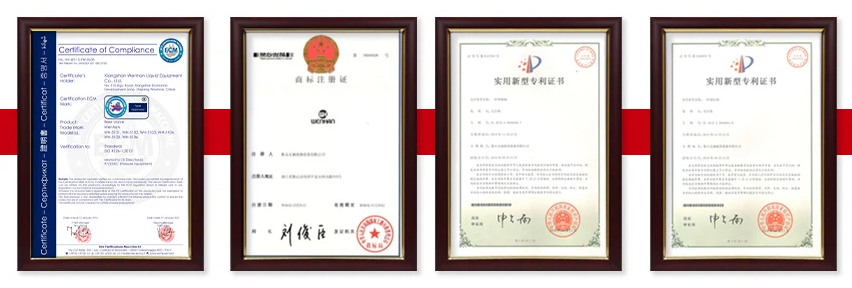
Our certificate
National High-Tech Enterprise, Demonstration unit of double guarantee of quality and reputation, Zhejiang Science and Technology Innovation Enterprise Technology Company,AAA enterprise credit and more than 10 practical patents, In 2013, it was rated as a science and technology enterprise in Zhejiang Province, In 2018, it was rated as a national high-tech enterprise and a double-guaranteed enterprise for quality and reputation, in 2019, it was rated as a national high-tech enterprise and a double-guaranteed enterprise for quality and reputation, Was rated as a national science and technology enterprise and many other honors.
Components of Sanitary Regulating Valves
Sanitary regulating valve body
The body of the sanitary regulating valve is the outer casing and is typically made from stainless steel or other hygienic materials. It is often designed for easy cleaning and sterilization.
Actuator
This is the component that physically moves or controls the sanitary regulating valve. It can be either manual (hand-operated), electric, or pneumatic (air-operated). The actuator is attached to the sanitary regulating valve stem, which in turn controls the opening and closing of the sanitary regulating valve.
Sanitary regulating valve disc or plug
This is the part of the sanitary regulating valve that directly regulates the flow of the media. When the actuator moves the stem, the plug or disc either opens or closes the sanitary regulating valve, depending on the design.
Stem
The stem connects the actuator and the sanitary regulating valve disc. It transmits the actuator movement to the disc, allowing the sanitary regulating valve to open or close.
Seat
This is the surface against which the sanitary regulating valve disc seals. When the sanitary regulating valve is closed, the disc contacts the seat, creating a seal that prevents flow. It’ s also designed for easy cleaning and to reduce contamination.
Seals and gaskets
These are used to ensure a tight fit and prevent leakage between different parts of the sanitary regulating valve. They are typically made from high-purity elastomers or plastics that can withstand sterilization processes.
End connections
These are the parts of the sanitary regulating valve that connect to the pipeline or equipment. In sanitary sanitary regulating sanitary regulating valves, these are often designed to be easy to connect and disconnect for cleaning. Common types of end connections are clamp, weld, thread, and flange.
Bonnet
This part houses the stem, keeping it properly aligned with the actuator and the disc. It’ s also responsible for preventing leakage from the space where the stem exits the sanitary regulating valve body. Each of these components plays a crucial role in the operation of a sanitary control sanitary regulating valve and can be designed to meet specific hygienic standards.


Material selection
Material selection is important in sanitary regulating valve to ensure resistance to corrosion, ease of cleaning using the sip and cip techniques, compatibility with substances they contact, and high-temperature resistance. The materials should withstand high temperatures in sterilization methods like autoclaving or steam cleaning. Choosing the right materials, such as stainless steel, alloys, or fda-approved polymers, helps maintain the valves' hygienic properties and prevents contamination risks.
Surface finish
The internal surfaces of sanitary regulating valve are often polished to a high degree of smoothness to prevent the adhesion of particles and bacteria. They have specific surface-finish requirements to ensure optimal hygiene. These standards, such as the ra (roughness average) value, specify the level of smoothness and cleanliness required for the valve's surface. A lower ra value indicates a smoother surface, easier to clean, and less prone to bacterial adhesion. Sanitary regulating valve utilize high-quality seals to prevent any potential contamination. These seals are usually made from silicone, epdm, or viton, which are resistant to high temperatures and corrosion.
Electropolishing
Electropolishing involves immersing the valve in an electrolyte bath and applying an electric current to remove surface imperfections and enhance corrosion resistance. Electropolished surfaces are smoother, more contamination-resistant, and easier to clean.
Tri-clamp connections: Sanitary regulating valve often use tri-clamp connections, also known as tri-clover or tri-clover fittings. These connections provide a secure and hygienic seal between two components, such as a valve and a pipe or a valve and a tank. Tri-clamp fittings are easy to assemble, disassemble, and clean, making them popular in industries requiring frequent sterilization.
Welding techniques
Sanitary regulating valve often employ specialized welding techniques, such as orbital welding or sanitary tig (tungsten inert gas) welding. These techniques provide precise and consistent welds without introducing contaminants, ensuring the integrity and hygienic properties of the valve.
Signal reception
The operation of a sanitary regulating valve often begins with the reception of a signal from a control system. This system monitors the process conditions, such as flow rate, pressure, or temperature. When the system determines that a change in flow is needed based on these parameters, it sends a signal to the valve actuator.
Actuator response
Upon receiving the signal, the actuator, which can be either electric or pneumatic, activates. It moves to adjust the position of the valve. The actuator is typically connected to the valve stem, which in turn is connected to the disc or plug of the valve. The movement of the actuator determines whether the valve opens, closes, or partially restricts the flow.
Flow regulation
The disc or plug inside the valve body is the component that physically interrupts or allows the flow of media. When the actuator is activated, it moves the stem and disc/plug. If the actuator moves the plug to an open position, the flow of media is allowed. If it moves to a closed position, the flow is stopped.
Sealing
When the valve is in the closed position, the disc or plug creates a seal with the valve seat, effectively preventing the flow of media. The seals and gaskets of the valve also play a crucial role in preventing leaks and ensuring the system remains sanitary.
Return to normal operation
Once the necessary adjustments have been made and the desired process conditions have been achieved, the control system sends a signal to the actuator to return the valve to its normal operating position, if necessary. This could mean fully opening, fully closing, or adjusting to a particular level of restriction.
Cleaning and sterilization
Sanitary regulating valves are typically designed to be easily cleaned and sterilized without needing to be disassembled. This can often be done with clean-in-place (cip) or steam-in-place (sip) procedures, which circulate cleaning and sterilizing agents through the system to ensure it remains free of contamination.
Before maintenance, relieve the pressure on the pipeline and fully open the valve, disconnect the power supply or air supply, and disengage the actuator from the bracket. Make sure that the pressure on the upstream and downstream of the sanitary ball valve is removed before starting the operation. Find out the steps and processes when decomposing and reassembling. Cleaner should be compatible with ball valve rubber parts, plastic parts, metal parts and the media. When the medium is gas, gasoline can be used to clean the metal parts. Cleaning non-metallic parts should be purified with pure water or alcohol. Disassembled parts can be cleaned with immersion, and undecomposed parts can be cleaned with a clean silk dipped detergent. After cleaning all the grease, dirt, glue, dust and so on adhered to the wall must be removed. Non-metallic parts should not be soaked in detergent for a long time to avoid swelling and corrosion.
After cleaning, new silk cloth can be used to dry. Once the wall surface cleaning agent evaporates completely, then assemble. At this point, be careful not to shelve for a long time, otherwise it will cause rust and dust pollution problems. After all parts are cleaned and dried, lubricate the metal materials, rubber parts and plastic parts with grease. When the medium is gas, for example, special-221 grease can be used. Apply a thin layer of grease over the seal mounting groove surface, the rubber seal, the valve stem sealing surface, and the friction surface. When assembly, the environment must not contain metal shavings, fibers, dust and other impurities, foreign matter or contamination into the parts remaining in the lumen. Check whether all the components match the installation finished after assembly. If there were no problems, assemble with the pipe finally.
Sanitary regulating valve uses the stem to tighten elastomer film on the seat to block the air path. Rotating the handwheel can drive the stem up and down so that the diaphragm from the seat to open the valve or the diaphragm tight pressure on the seat to close the valve. If the nitrile butadiene rubber diaphragm is used, the valves are suitable for the front-end and drainage pipeline and the noncorrosive gas transport within the temperature of 25 ~ 80 ℃; if the fluorine rubber diaphragm is used, the valve can be used to the high vacuum system with a temperature range of – 30 ~ 150 ℃. Although the sanitary regulating valve has a variety of unique performances, each kind of valve body in use has a service life and maintenance cycle. Only the sanitary regulating valve maintenance works well, the valve body can better play its performance and have a longer service life. Attention must be paid to the maintenance of the sanitary regulating valve in the process of use, and there are detailed descriptions of the maintenance requirements in the operation manual.
There are certain requirements for the maintenance of the sanitary regulating valve. Due to the existence of a diaphragm in this valve body structure, there are strict requirements in daily storage. The valve body must be placed in a dry and ventilated indoor, prevent the aging of the diaphragm caused by the damage of the valve body. In addition to the maintenance of a sanitary regulating valve, the diaphragm is also an important maintenance part in the process of use. According to different media, the maintenance cycle for the diaphragm is not the same, and it needed to be replaced according to the different cycles so that the valve body can be better used. The metal surface of the valve body must be kept clean without oil stains and appropriate application of rust remover, so as to prevent the valve body from serious oxidation corrosion.
Type of the media
The type of media that will be flowing through the sanitary regulating valve, whether liquid, gas, or semi-solid, will greatly influence your choice of sanitary regulating valve. Also consider the characteristics of the media, such as its viscosity, temperature, corrosiveness, and whether it contains particulate matter.
Flow control needs
If you need to be able to finely adjust the flow rate, you’ ll want a sanitary regulating valve designed for throttling, such as a butterfly or diaphragm sanitary regulating valve. If you only need to fully open or close the flow, a ball or plug sanitary regulating valve may be more suitable.
Pressure and temperature
The operating pressure and temperature in the system are also important considerations. Some sanitary regulating valves are better suited to high pressure or high temperature environments than others.
Hygiene requirements
If you’ re in an industry that requires very high hygiene standards, such as food and beverage, biotech, or pharmaceuticals, make sure the sanitary regulating valve meets all relevant standards. Consider the ease of cleaning and whether the sanitary regulating valve can withstand clean-in-place (cip) or steam-in-place (sip) procedures.
Actuation
Consider how you want the sanitary regulating valve to be actuated. Manual sanitary regulating valves are simple and cost-effective, but require personnel to physically adjust them. Automated sanitary regulating valves can be controlled remotely and integrated into your process control system, providing greater precision and freeing up personnel for other tasks.
Installation and maintenance
Check if the sanitary regulating valve can be easily installed in your current system. Some designs are more compact, making them more suitable for systems where space is limited. Also, consider the ease of maintenance and the availability of spare parts.
Our company has a workshop area of 50,00 square meters and more than 100 employees. In our locations, there are many mature parts supply chains and experienced employees, which makes us unique. After several years of development, we have a large-scale, high-quality production capacity. Our products are widely used in the dairy, food, beer, beverage, pharmaceutical and cosmetic industries.


We're well-known as one of the leading regulating valves manufacturers and suppliers in China. Our factory offers high quality regulating valves made in China with competitive price. Welcome to contact us for wholesale service.
honeywell water pressure regulator, water regulator for house, compressor pressure regulator valve(0/10)



