
Superior hygiene standards
Our products are built to meet strict hygiene standards. Their smooth surfaces and sanitary seals minimize the risk of product contamination, ensuring the integrity and safety of the fluid being processed.
Traceability
It's important to have complete traceability (the ability to track a product's history, origin, materials, and movement throughout its lifecycle) of all components, including valves.
Our factory
Our company has a workshop area of 50,00 square meters and more than 100 employees. In our locations, there are many mature parts supply chains and experienced employees, which makes us unique.
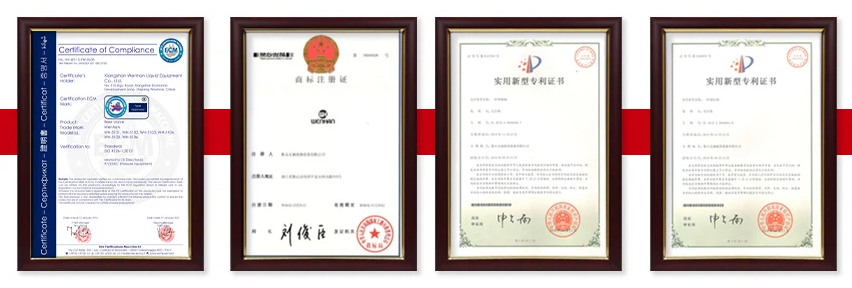
Our certificate
National High-Tech Enterprise, Demonstration unit of double guarantee of quality and reputation, Zhejiang Science and Technology Innovation Enterprise Technology Company,AAA enterprise credit and more than 10 practical patents, In 2013, it was rated as a science and technology enterprise in Zhejiang Province, In 2018, it was rated as a national high-tech enterprise and a double-guaranteed enterprise for quality and reputation, in 2019, it was rated as a national high-tech enterprise and a double-guaranteed enterprise for quality and reputation, Was rated as a national science and technology enterprise and many other honors.
Rotary cleaning ball
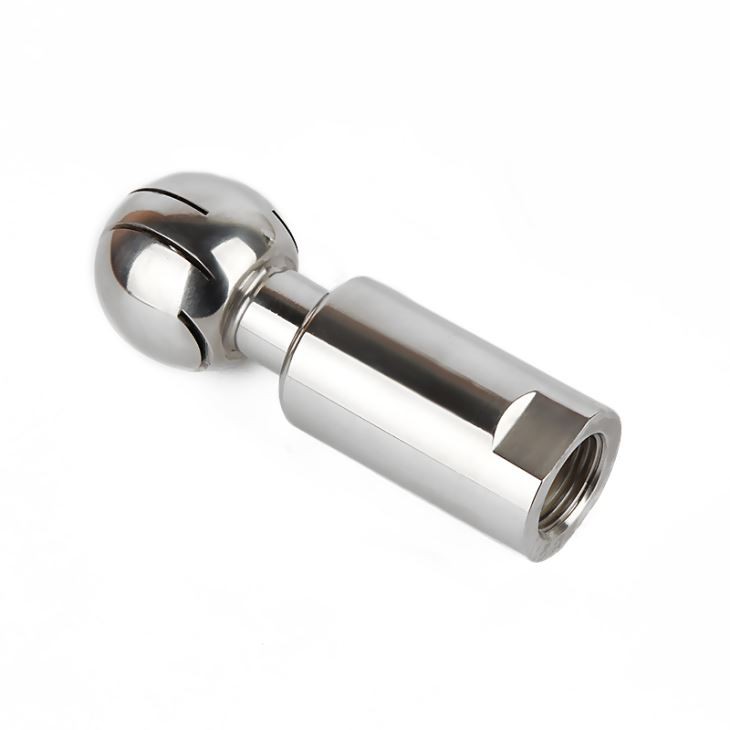
The rotary scrub ball is a rotary spray head that thoroughly washes and sprays the tank with detergent. Since this device uses less washer fluid at low pressure, it is an effective alternative to traditional fixed spray balls. The use of double ball bearings in the swivel head makes this range of cleaning balls suitable for all sanitary and industrial cleaning applications, including cleaning tasks for all sanitary and industrial items such as tanks, reactors and vessels. Rotary cleaning ball: The cleaning liquid rotates the cleaning ball nozzle through its own power, and the fan-shaped jet flow forms a vortex in the entire storage tank and reaction vessel, thereby effectively removing the residual products left on the surface of the container to achieve cleaning.
Fixed cleaning ball
The cleaning ball passes through the small opening of the nozzle of the cleaning ball to form a spray flow to the surroundings, so as to remove the residual product left on the surface of the container and achieve the cleaning effect.
Horn cleaning ball
Connection form: Welding type, quick installation type, screw type. Material: Made of sus304, sus316l. Pipe flow control: Dn20-50 and 3/4”-2”. It can be cleaned in various stainless steel tanks. Material: Aisi304 or aisi316l. Application: Effective cleaning of storage tanks for dairy products, beer, food, beverages, pharmaceuticals, etc. Structure: Nozzle type tank washer, rotary cleaning ball, fixed cleaning ball (spray cleaning ball). Finish: Mechanically polished inner surface ra≤0.4-0.8μm, mirror (ba) or matte (2b) outer surface, ra≤0.8μm. Spray angle: 360°, 90°. Uses: Effective cleaning of large, medium and small tanks; high cleaning efficiency, low water consumption, and low energy consumption; can be used for universal cleaning at any angle.
Introduction to the Basics of Cleaning Balls
The pattern and diameter of the hole are designed to suit the particular system you are cleaning. The patterns will vary regarding the degree coverage they allow. Some will allow for 180-degree cleaning; others will have degree coverage of 270-degrees while others will allow coverage of up to 360-degrees. The most common type of material used to construct the cleaning balls is type 316l stainless steel. Majority of them contain a smooth electropolished surface of more than 20 ra (0.5 μ). Although the standard range patterns available include 360-degree, 270-degree and 180-degree, the drilling patterns can be fine-tuned to meet the increasing demand for efficiency in cleaning and minimizing waste. The cleaning balls can be drilled with specific target areas in mind. They can also be drilled to conform to specifications that you demand as a user. It will depend on the size of the vessel, the flow rate available and the type of cleaning.
Cleaning balls are made up of a sphere of a hollow sphere made from hygienic 316l stainless steel that has a hole precisely perforating it. It creates a series of jets of fluid cleaninging in all directions as water passes through under immense pressure. The jets strike the tank walls, spread out and flow downwards. This process allows for effective cleaning. The cleaning ball has a simple design that has no moving parts. The design ensures that they are reliable and do not require regular maintenance.
The holes in the cleaning balls should be drilled to 2.0 mm (0.079 in). It would reduce the velocity to 18 ft/sec. This speed will be adequate for cleaning the system, but most importantly, it is safe and will not lead to cleaning ball erosion. You should also take further measures to mitigate the effects of the erosion. They include refinishing the tank. The process allows for grinding of the eroded spots to get rid of the affected metal, polishing the metal surface to a finish of 20 ra (0.5 μ) and electropolishing the ground spots. The whole system then needs to be de-rouged and taken through the process of repassivation using citric acid with an iron chelating agent known as ethylenediamine tetra acetic acid (edta). You should entrust de-rouging only to a reputable contractor.


Time
The total amount of time required to run a complete cleaning sequence is the sum of a number of different steps (such as preparation, programming, wash and rinse, drying, etc.), but the critical ‘time’ element of the cleaning process is the amount of time that cleaning solutions are in direct contact with the product soil. Your wash and rinse cycle times may each be as short as 10-15 minutes, or they may take up to an hour or more depending on system design. Since the time spent cleaning reduces the time spent producing saleable product, the goal is to reduce cleaning cycle times as much as possible while still ensuring that the process system is sufficiently clean and safe.
Action
The action in a cleaning process is the mechanical force of the cleaning solution that physically dislodges soil from the surface. The amount of impingement needed--and therefore the spray devices and pressure required--are important considerations.
Concentration
The right concentration of chemical cleaning agents make a significant difference in cip efficiency. The main job of chemicals in any cip process is to enhance cleaning. To maximize cleaning while conserving chemicals to minimize waste, consult a cip specialist at csi.
Temperature
Calculating the precise solution temperature is critical to effectively cleaning a system while at the same time reducing energy costs. Some studies have shown that for every one-degree reduction in cip solution temperatures there will be nearly a 1% reduction in the energy needed to heat the fluid.
Drill pattern
Cleaning ball drill patterns depend on a cleaning ball’ s placement, surface area coverage requirements, and obstructions. Cleaning ball patterns ranging from 90- to 360-degree coverage. Ball diameters typically range from 1.25″ to 4″.
Connection size
Connection size may range from 0.5″ to 2.5″ and determines the maximum flow delivered through a cleaning ball with acceptable pressure drops. For example, a cleaning ball with a 0.5″ connection can only deliver a flow rate up to 12 gpm, whereas a connection size of 2.5″ can deliver a flow rate up to 400 gpm lending itself to clean a much larger vessel.
Connection style
A slip collar is a standard connection. Other connection styles include butt weld, flare (no connection), tri-clamp, half coupling, and pipe nipple. The half coupling and pipe nipple options are not 3-a compliant, all other connection styles are 3-a compliant.
Flow (gpm)
A minimum flow rate of 3 gpm for every foot of tank circumference is required to provide enough flow for cleaning coverage.
Pressure (psi)
25 psi is the standard design flow rate if not specified by the user. The maximum pressure for custom cleaning balls is 70 psi. Spray atomization occurs above this pressure.
Finish (microinch ra)
Sani-matic’ s standard finish is 32 μin ra/150 grit and can be customized to 15 μin ra/240 grit to meet a variety of industry standards.
Finish options
Electropolish can be added to any finish. Spherical, tangential or spray bubble.
Media from the static fixed cleaning ball hits the tank interior in a pre-defined cleaning pattern which is fixed as a result of holes being drilled into the static ball. This freefalling film cleans the tank walls but takes a relatively long time and can result in excess water/chemical usage. Whether you are producing beer, yoghurt, bio-fuels, milk, carbonated soft drinks or food products, manufacturers are required to clean their tanks to the highest of standards in order to prevent contamination and to ensure they are meeting their relevant health and safety legislations. This often leads process engineers struggling to understand what the most cost effective way to clean their tank is and how they can maintain their impeccably high standards whilst still meeting both financial and environmental targets.
Static fixed cleaning balls is the most basic form of cleaning and is as simple as it looks. Media from the static fixed cleaning ball hits the tank interior in a pre-defined cleaning pattern which is fixed as a result of holes being drilled into the static ball. This freefalling film cleans the tank walls but takes a relatively long time and can result in excess water/chemical usage. Standard static fixed cleaning balls do not allow for areas within the tank to be target drilled. The cleaning pattern is normally a standard 360°or 180° cleaning pattern which can therefore create shadow areas within the tank. Shadow areas within a tank are caused by standard cleaning patterns not being able to focus on areas within a tank which need a concentrated clean, such as manways, nozzle connections, baffles etc. If tanks need to pass a riboflavin test this will cause an issue. After a clean and it clearly shows that the tank has failed a riboflavin test. The green water drops indicate that although the area was ‘wetted’ there was not enough targeted impact to remove the riboflaivn.The solution to resolve this issue is to used fixed ‘targeted’ cleaning balls which have a designed cleaning pattern to ensure all areas within the tank are targeted which will guarantee the tank pass the all important ribofliavin test which has now become a standard requirement.
Standard fixed cleaning ball initially offer a cost-effective solution giving tanks a good rinse and wetting the internal surfaces. Suitable for tanks with a maximum 1.5 impact cleaning radius. If the product is water soluble and has light residue to remove, then this may be an option. Also, if customers have limited flow rates, fixed cleaning balls can also be a solution. Standard fixed cleaning balls do rely on the media cascading the tank walls. This cost-effective option does come at a price, resulting in longer cleaning times and up to 70% more water/chemical usage compared to a rotary jet head. The additional water and chemicals to drain may not be in line with the ever-changing companies’ environmental policies. Ideal for passing riboflavin tests, removing product that is water soluble/ light residue to remove. By design the targeted cleaning balls have a thicker body wall which gives more of a ‘jetted’ cleaning pattern compared to the standard cleaning balls. This offers greater cleaning impact to the internal tank surfaces. The rotary cleaning head by name, offers a rotating fan cleaning pattern which in a dynamic cascading pattern wets the internal surfaces of the tank walls. The fan pattern creates a vibration off the tanks internal surfaces, agitating the residue making it easier to remove. This rotary cleaning head reduces water and chemical usage by up to 30% compared to static fixed cleaning balls whilst also cleaning the tank faster and consequently reducing downtime.
If you are looking for a general clean to remove light residues (water soluble) this solution is a good option. Rotary cleaning heads are suitable for tanks with a maximum wetting radius of 6m (3m impact radius) it will not clean yeast and other harder to clean residues effectively but does offer a 360° guaranteed repeatable cleaning coverage. Rotary jet heads generate high impact water jets that clean the inside of the tank in a guaranteed repeatable predefined pattern, removing even the most stubborn of residue. Initially these jets lay a course pattern out designed to remove and dilute tank residue.
Our company has a workshop area of 50,00 square meters and more than 100 employees. In our locations, there are many mature parts supply chains and experienced employees, which makes us unique. After several years of development, we have a large-scale, high-quality production capacity. Our products are widely used in the dairy, food, beer, beverage, pharmaceutical and cosmetic industries.


We're well-known as one of the leading cleaning ball manufacturers and suppliers in China. Our factory offers high quality cleaning ball made in China with competitive price. Welcome to contact us for wholesale service.
pressure regulator valve home depot, low pressure back pressure regulator, pressure relief regulator(0/10)



