
Superior hygiene standards
Our products are built to meet strict hygiene standards. Their smooth surfaces and sanitary seals minimize the risk of product contamination, ensuring the integrity and safety of the fluid being processed.
Traceability
It's important to have complete traceability (the ability to track a product's history, origin, materials, and movement throughout its lifecycle) of all components, including valves.
Our factory
Our company has a workshop area of 50,00 square meters and more than 100 employees. In our locations, there are many mature parts supply chains and experienced employees, which makes us unique.
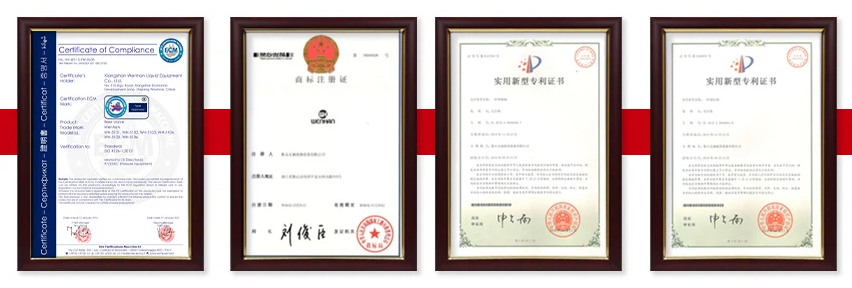
Our certificate
National High-Tech Enterprise, Demonstration unit of double guarantee of quality and reputation, Zhejiang Science and Technology Innovation Enterprise Technology Company,AAA enterprise credit and more than 10 practical patents, In 2013, it was rated as a science and technology enterprise in Zhejiang Province, In 2018, it was rated as a national high-tech enterprise and a double-guaranteed enterprise for quality and reputation, in 2019, it was rated as a national high-tech enterprise and a double-guaranteed enterprise for quality and reputation, Was rated as a national science and technology enterprise and many other honors.

For the steel components of the valve, sanitary valves are typically constructed from either 304 or 316-series stainless steel. Depending on the valve application, more exotic grades of stainless steel such as AL6XN can be used for highly corrosive applications like high temperatures, high pressure, and chemicals.
For rubbers and plastics used in sanitary valves, various authorities within the industry set standards that must be met by these materials. Some examples would be FDA 21CFR.177.2600, 3A Sanitary Standard 18-03 Requirements for Rubbers, or US Pharmacopeia (USP) specific requirements. These material standards and specifications are designed to protect the integrity of the product being processed and therefore protect the consumer from contamination. One of the most common plastics used is PTFE, while common rubber types are EPDM, FKM, NBR, and Silicone.
Types of Sanitary Valves
Sanitary butterfly valve
Sanitary butterfly valves have a spinning disc that quickly opens or blocks off the interior area of an attached pipe system to halt the flow of fluid. They can remain partially shut to create a pressurized stream of fluid or fully open by rotating the disc to be parallel with the fluid flow. Sanitary butterfly valves are commonly used in throttle valve applications.
Sanitary ball valve
Sanitary ball valves are composed of a hollow, pivoting ball and are commonly used for fluid regulation and control applications. Operators use a handle to quickly open the valve by aligning the hole with fluid flow, and close it by pivoting the ball 90°, allowing the flow of liquid to stop immediately.
Sanitary check valve
Sanitary check valves have a unique design that prevents potential backflow. The entrance port is blocked by a disc on a spring. When the fluid has enough force, it pushes against the disc, through the valve, and out the exit port. When the pressure isn’t strong enough, the check valve seals shut, ensuring one-way flow. Sanitary check valves are commonly used in complex manufacturing and processing applications.
The Difference Between Sanitary Valves and Ordinary Valves
Strictly speaking, the manufacturing standards for sanitary valves are very high. They are mainly developed for bio-fermentation companies and have very high requirements for the smoothness of the valve runner. Each part of a sanitary valve that will contact fluid must be made of stainless steel—usually 304SS or 316 stainless steel. Such material is non-toxic and non-hazardous, with a clean and smooth surface that doesn’t produce corrosion and shedding. With special treatment after manufacturing and processing, sanitary valves are made with superior quality to industrial valves in many ways, such as cleanliness and simple installation. They’re widely used in food, medical and other industries.The unique features of each industrial valve are determined by the demands of its specific application. Industrial valves are primarily used in high-temperature and high-pressure working environments because they offer extreme durability and flexible operation. They’re widely applied in industries like machinery, metallurgy, petrochemicals, and urban construction. Although the exterior and interior of industrial valves are not as smooth and sterile as those of sanitary valves, industrial valves are vital in many different applications.
All sanitary valves need to be disinfected to meet certain health criteria. Non-sanitary valve manufacturers cannot produce such valves because all toxic components must be eliminated (such as lead), which can cause poisoning, cancer, or even death. That’s why most sanitary valves are built exclusively with stainless steel material. Another key feature of sanitary valves is that they must be free from crevices, cavities, and sharp corners where bacteria and other foreign matter can accumulate. They also require compatibility with easy cleaning-in-place (CIP) procedures.
There are many different types of sanitary valves, including sanitary stainless steel ball valves, sanitary butterfly valves, sanitary plug valves, sanitary rotary valves, and many more. Each type of sanitary valve serves its own purpose within industrial fluid systems. But they all share a common characteristic—they’re built with completely sterile and contaminant-free components to maintain the health and purity of the product that flows through them. Sanitary valves are used in highly hygienic environments such as pharmaceuticals, food, and daily commodities. Ordinary valves bring precise control to industrial fluid transmission systems, providing diversion, medium, regulation, anti-backflow, shunt, and pressure relief functions. There are already many different types of valves in use across the vast industrial world. With the continuous performance improvements of various technical equipment, more and more valve variations are necessitated every year.
Water treatment and purification
Sanitary valves are used in water treatment plants to control water flow, ensuring clean and safe drinking water for communities.
Food and beverage
In food and beverage processing, sanitary valves are essential to maintain hygiene and prevent contamination while producing beverages, dairy products, sauces, and other consumables.
Pharmaceutical and biotech
Sanitary valves play a crucial role in pharmaceutical and biotech processes, where maintaining the purity and sterility of fluids is vital for drug production and research.
Cosmetics and personal care products
The cosmetics and personal care industry relies on sanitary valves to precisely control ingredients during the production of lotions, creams, and other personal care products.
Chemical and petrochemical
Sanitary valves are used in chemical and petrochemical processes, where corrosive or hazardous fluids must be controlled with maximum safety and cleanliness.


Cleaning
One of the most important things to remember when dealing with valves is that they need to be cleaned. Valves are used for water, oil, and gas. They are used in applications such as home brewing and food processing. This means that what is flowing through the valves could end up being consumed by other people. This is one reason why it is important to clean them. Not to mention the fact that if there are dust particles and contaminants that can prohibit a smooth flow of liquid or gas. This can slow down your process and/or harm your pipes. There are a variety of cleaning products that you can use to purify your valves. You can also wash them by running them through good old-fashioned hot water. This will kill any bacteria or dirt. If you are using valves for home brewing or food processing, it is even a good idea to clean them before their first use as they may have collected contaminants during their journey to your facility.
Storing
If you have purchased some valves but do not intend to use them for a period of time, then it is important that you have a clean space where you can store them. It is imperative to store them in a place that is protected from the weather, dirt, etc. Additionally, it is best to store them with a protective covering to help guard against bacteria and dust. This goes back to the previous point of keeping them clean and contaminant-free.
Leak inspecting
In the world of valves, leaking is a problem. Well, in the world of many things leaking is a problem. Anyways, as soon as you detect leakage you should go into sherlock holmes mode and determine what the root cause is. It is not always the valve that is the problem so it may be necessary for you to inspect the pipes, connectors, or other pieces of the infrastructure. However, if it is the valve, it is crucial to determine what the problem is and fix it immediately. This may seem like an obvious point, but it is something that is easily overlooked. Small leaks can lead to big problems. Sometimes the solution is simply tightening a nut or bolt. Other times, a more involved solution will be necessary. Either way, regular inspection will help you in the long run. It is always better to catch the issue early on before it turns into something more serious.
Signal reception
The operation of a sanitary valves often begins with the reception of a signal from a control system. This system monitors the process conditions, such as flow rate, pressure, or temperature. When the system determines that a change in flow is needed based on these parameters, it sends a signal to the valve actuator.
Actuator response
Upon receiving the signal, the actuator, which can be either electric or pneumatic, activates. It moves to adjust the position of the valve. The actuator is typically connected to the valve stem, which in turn is connected to the disc or plug of the valve. The movement of the actuator determines whether the valve opens, closes, or partially restricts the flow.
Flow regulation
The disc or plug inside the valve body is the component that physically interrupts or allows the flow of media. When the actuator is activated, it moves the stem and disc/plug. If the actuator moves the plug to an open position, the flow of media is allowed. If it moves to a closed position, the flow is stopped.
Sealing
When the valve is in the closed position, the disc or plug creates a seal with the valve seat, effectively preventing the flow of media. The seals and gaskets of the valve also play a crucial role in preventing leaks and ensuring the system remains sanitary.
Return to normal operation
Once the necessary adjustments have been made and the desired process conditions have been achieved, the control system sends a signal to the actuator to return the valve to its normal operating position, if necessary. This could mean fully opening, fully closing, or adjusting to a particular level of restriction.
Cleaning and sterilization
Sanitary valvess are typically designed to be easily cleaned and sterilized without needing to be disassembled. This can often be done with clean-in-place (cip) or steam-in-place (sip) procedures, which circulate cleaning and sterilizing agents through the system to ensure it remains free of contamination.
Our company has a workshop area of 50,00 square meters and more than 100 employees. In our locations, there are many mature parts supply chains and experienced employees, which makes us unique. After several years of development, we have a large-scale, high-quality production capacity. Our products are widely used in the dairy, food, beer, beverage, pharmaceutical and cosmetic industries.


We're well-known as one of the leading sanitary valves manufacturers and suppliers in China. Our factory offers high quality sanitary valves made in China with competitive price. Welcome to contact us for wholesale service.
zurn wilkins water pressure regulator, ball valve butterfly valve, adjustable water pressure regulator(0/10)



