
Tank manways are important components in the vast majority of pharmaceutical, biotech, chemical, and food and beverage tanks allowing the user access into the vessel. Our tank manways are available for low-, mid-, and high-pressure applications, with a crevice-free design that lends itself well to sanitary applications. Excellent for sanitary applications: No crevice for product buildup, self-draining (excellent for cip cleaning). Cover and upper flange welded with full penetration plasma arc weld—can be manufactured in stainless steel or nickel alloys. O-ring gasket retained in cover—will not fall into vessel when opened. Entire manway safe for autoclave conditions. Innovative spring assist reduces lifting force at handle. Stainless steel internals, smooth operation, compact design, and easy to install. Automatically locks cover in 105° open position. Simple to operate, stainless steel construction (can be used in conjunction with spring assist assembly).
Durability and strength
Durability and strength are important qualities for any product, but especially when it comes to stainless steel tank tank manway. High quality manway covers for beer vats must be able to withstand a variety of pressures and other environmental factors. They should also be aesthetically pleasing and match the look of the rest of the brewery. Stainless steel is an ideal material for constructing tank tank manway because it is corrosion-resistant, durable, and strong enough to handle high pressure.
Resistance to corrosion and contamination
Resistance to corrosion and contamination is a vital factor for any brewery or beer production facility. The choice of inadequate manway can lead to contamination, resulting in a lower quality product and ultimately, a lower risk of customer satisfaction. One material that is widely used for its resistance to corrosion and contamination is stainless steel tank manway. Oval tank manway arched to the curvature of the tank provide an optimal seal that prevents contaminants deposition in the tank.
Easy to clean and sanitize
To ensure the highest standards of cleanliness and hygiene, stainless steel equipment is often used in breweries. This includes a stainless steel manway which provides easy access to tanks for cleaning and sanitizing purposes. The stainless steel material is also known to be resistant to corrosion, making it easier to keep clean and sanitized. Not only does this reduce the risk of bacteria or contamination, but it also ensures that any beer produced is safe for consumption.
Cost-effective
Stainless steel tank tank manway are an incredibly cost-effective option when compared to other materials. This makes them a great deal for breweries and other businesses that require beer production. Costs are kept low thanks to the durability of stainless steel, as it requires less maintenance and repairs than other materials.
Material types and finish
Different jobs require different materials, so manufacturers offer tank manway in various types of materials. This includes the standard stainless-steel options such as t304, t316l or 1.4301, 1.4404, etc. Other materials include ptfe, fpm, epdm, buna-n, nbr, or silicone gaskets as sealing materials to eliminate crevices. Material finishes are not standardized. Depending on your industry, you can get the manway cover in polished id/od from 2b to 400-grit finish.
Shapes
Depending on which industry you are in, tanks vary in size and design, which means that manufacturers must supply tank manway suitable for various tank shapes. You can get rectangular manway such as those that get mounted on the side of mash tines to enable removal of grain. The elliptical manway is often mounted onto beer tanks, and their doors can swing both ways outwards and inwards. Shadowless tank manway are used in cases where no interior protrusion is required to eliminate any condition for unsanitary buildup. Other shapes include the round tank manway, oval tank manway, and square tank manway.
Additional lift assist
Additional features for a lift assist apart from the spring lift include the use of gas cylinders such as those filled with nitrogen to completely lift the manway off and allow the customer full access to the inside of the vessel.
Asme code vs. Non-code
Whether you need tank manway to handle atmospheric designs, asme code assemblies, pressure assemblies, the tank manufacturing industry has got you covered. Apart from that, you can also get non-code economical tank manway for standard storage facilities.
Sanitary tank manway connection
Common connection types include tri-clamped, welding, threaded, etc.
Time sensitive
Depending on your industry, some applications require frequent vessel inspection, while others could do with a once in a blue moon inspection. Either way, you need the proper manway for your tank to ensure safe operations. Not all tank manway are created equal as we have seen, they come in a variety of pressure setting, materials, shapes, and sizes for the specific type of vessels. For highly time-sensitive operations, consider getting the quick-release tank manway that make use of hinged wingnuts. These are easy to open without the need for specialized tools. Bolted flanges, on the other hand, tend to be extremely time-consuming. Just think about it: You’ ve got to get a spanner, lubricate the bolt a bit and give it time to soak before you begin undoing the 24-36 bolts. And all along staying keen not to lose any bolt. This may take you around 20-40 minutes. And once you’ re done with the inside of the vessel, you’ ve got to put everything back together, say in 20-30 minutes. The total time can, therefore, go as high as 80 minutes per single manway.
Sealing
Sealing is another crucial thing to consider when getting a manway for your pressure vessel. For external tank manway, there’ re no sealing challenges since the flanges make use of bigger bolts to compress the gaskets in place. For internal tank manway, however, gasket problems arise. If the internal vessel pressure is not high, the manway won’ t sit properly in place. But as internal pressure increases, the stress on the gasket increases too, and the bolts in place become loose. The solution is to use softer gaskets for low-pressure vessels and rigid, reinforced gaskets for higher pressure vessels.
Pressure level
Depending on the pressure, you can get low, mid-range, or high-pressure tank manway. You can also get tank manway with specific pressure ratings. All in all, you should consider tank manway with quick opening closures design (qocs). Such designs not only maintain an effective seal but can be opened quickly once the system has been depressurized. Apart from designs, you can also make use of threaded closures such as swingbolts and clamp style closures. Though the former has limited pressure ratings and the latter are not that safe if one part of the clamp fails, the whole sealing fails.


Development of manway seals has come a long way over the years with new, tried and tested materials being used reviewing what materials offer the best solutions for businesses who have experience. Most manlid door seals are now made with rubber, as it has been reported that hinged and bolt manways have, in the past, been the number one cause of Non-Accident Releases, which has had dramatic consequences for the businesses and individuals involved. For example, elastomeric gaskets are made from rubber materials including, Buna N, Viton, Nitrile, SBR, and EPDM. Food grade silicone and EPDM produced gaskets are the most common in the market. Mainly due to their elasticity, meaning they don’t compress and they’re able to deform even under the lightest of loads. However, silicone gaskets can withstand higher temperatures and are resistant to fungal attacks within tanks. But they do have a poor tolerance to steam.
EPDM manufactured gaskets have a lower upper-temperature limit, but these seals are resistant to steam, as well as ozone, acids, and alkalis. Specialist Sealing Products (SSP) offer several manway door seals for access doors, vessels, tanks and more. Vulcanizing seals to any dimension, size, and section. From round oval to rectangular we can supply seals in a range of materials all dependent on specific requirements and range of fluid content. Large tankers and vessels etc, are all constructed with a manway so that someone can ultimately get into these big tanks and fix any problems inside, as well as clean them out!Manways must be large enough for a person to be able to fit through and are most commonly found at the bottom of a tank. Each manway seal is different as the material and type of gasket used will all depend on the contents of what’s inside the container, i.e., the pressure and the temperature of the liquid contained inside.
Every manway needs a gasket/seal to stop it from leaking, and ideally, these should be soft, can resist taking on a compression set and where appropriate must be of a food-grade standard to avoid any contamination. If manway gaskets aren’t fitted correctly or they become broken, it can result in a full door gasket failure and pose significant safety risks as well as being extremely costly to repair. We uses the latest technology to help overcome such potential issues, designing seals to achieve successful gasket sealing through entire cycles – making our manlid door seals more reliable, sustainable and cost-effective.
Sanitary grade weld union type sight glass is a high-quality product that is designed for use in the food and beverage industry. It is made from high-quality materials, which are resistant to corrosion, and has a sturdy construction that can withstand the rigors of industrial use. This product comes with a unique union type design, which makes it easy to install and use. The sight glass feature of this product allows for easy monitoring of the flow of liquids and gases within the process line.The trend in the food and beverage industry is shifting towards the use of high-quality components to ensure food safety and quality. As a result, the demand for products like the expected to increase in the coming years. Manufacturers are also expected to incorporate advanced technologies in the production of similar products to meet the ever-evolving needs of the industry.
High clarity
The sanitary grade weld union type sight glass is made from high-quality materials that offer exceptional clarity, allowing for a clear view of the fluid flow. It ensures accurate visual inspection and monitoring of the process, facilitating quality control and troubleshooting.
Hygienic design
Crafted from sanitary-grade materials, the sanitary grade weld union type sight glass features a hygienic design with smooth surfaces and minimal crevices. This design minimizes the risk of bacterial growth, facilitates easy cleaning and sterilization, and ensures compliance with stringent hygiene standards.
Durable construction
The sanitary grade weld union type sight glass is built to withstand demanding operating conditions. It is resistant to corrosion, pressure, and temperature variations, ensuring long-lasting performance and reliability.
Quality control
The sanitary sanitary grade weld union type sight glass enables operators to visually inspect and monitor the fluid flow, ensuring product quality and detecting any impurities or abnormalities. It facilitates real-time quality control, allowing for immediate corrective actions and minimizing the risk of product defects.
Application of Sanitary Grade Weld Union Type Sight Glass
Sanitary grade weld union type sight glasses, also known as view glasses or sight windows, are transparent windows that are used to observe the level or contents of a tank, pipeline or other vessel. They provide a visual indication of the fluid level or flow, thereby ensuring safe and efficient operation of various industrial processes. Sanitary grade weld union type sight glasses are commonly used in a variety of industries, including chemical, pharmaceutical, food and beverage, and oil and gas.
Sanitary grade weld union type sight glasses is that they provide an easy way to monitor the level of a liquid without having to open the container or rely on guesswork. This is particularly important in industries where precise control of liquid levels is critical for safety and quality control. For example, in chemical manufacturing, sanitary grade weld union type sight glasses are used to monitor the level of toxic or hazardous substances, ensuring that they do not exceed safe limits and causing harm to operators or the environment. Sanitary grade weld union type sight glasses is that they offer a cost-effective solution for monitoring fluid levels and flow. They are relatively simple to install and require minimal maintenance, making them a popular choice for a wide range of applications. In addition, they can be customised to fit a variety of tanks and vessels, making them adaptable to different types of operations.
Sanitary grade weld union type sight glasses also provide a means of detecting potential problems and malfunctions in a system. For instance, if a sanitary grade weld union type sight glass indicates that the fluid level is lower than expected, this could indicate a leak or blockage in the system. Such early detection allows operators to take corrective action before the situation becomes critical, thereby reducing downtime and repair costs. The use of sanitary grade weld union type sight glasses has proven to be a valuable tool in a variety of industrial applications. They provide an efficient, cost-effective and safe means of monitoring fluid levels and flow, and are an essential component of many manufacturing processes. By facilitating the early detection of malfunctions and potential problems, sanitary grade weld union type sight glasses help ensure continuous and reliable operation of industrial systems.

Reflex level gauges
Reflex level gauges are ideal for clean service and non-viscous applications. Provides an easy to read black-silver indication (black = liquid, silver = vapour). Solid construction and tempered borosilicate glass.

Transparent level gauges
Transparent level gauges are ideal for dirty, corrosive services and process steam. Solid construction, using tempered borosilicate glass windows with the option of mica shields. Also known as a ‘through-vision’ gauge or ‘clear’ level gauges. An illuminator is always recommended to be fitted for easy reading of the gauge.

Options and accessories
Various valve options including: integral, union and os&y bolted bonnets. Various connection styles. Offset pattern for easy cleaning. Standard top/ bottom connections or side hook-up for increased visible length. Safety shut-off ball checks. Speciality materials of construction. Illuminators for improved visibility.
Maximum operating temperature
Standard soda lime sanitary grade weld union type sight glass windows or plastic view ports are only suitable for operating temperatures of 300°f or less. Above that temperature range, borosilicate glass or quartz/sapphire glass must be used.
Thermal shock
Sanitary grade weld union type sight glass engineers need to take rapid temperature changes into account when choosing what type of material to use in a sanitary grade weld union type sight glass. For this reason, borosilicate glass—with a lower coefficient of expansion than standard glass—is more tolerant of temperature changes, and is the preferred material for glass windows. Plastic sanitary grade weld union type sight glass windows will generally tolerate temperature changes well due to the elasticity of the material.
Corrosion
Some caustic or acidic fluids will cause sanitary grade weld union type sight glass windows to become ‘cloudy’ over time, hindering their transparency. In applications subject to these conditions, choose a sanitary grade weld union type sight glass window material (either glass or plastic) that’ s less susceptible to corrosive influences. Also, choose a sanitary grade weld union type sight glass frame material that’ s compatible with the fluid being observed, and corrosion resistant as well. Since many types of metals can be attacked by process fluids, stainless steel compounds of various types are the preferred frame material.
Abrasion
Choose a sanitary grade weld union type sight glass material that’ s not affected by particulates in the fluid being observed, which over time may abrade or erode the sanitary grade weld union type sight glass. Sanitary grade weld union type sight glasses can be inspected visually or with the aid of ultrasonic equipment to check for abrasions.
Pressure
Fused-type sanitary grade weld union type sight glasses (or cast-type plastic windows) should be used in all high-pressure applications to avoid sanitary grade weld union type sight glass failure.
Impact
In some applications, such as food processing, materials entrained in process fluids may impact against the sanitary grade weld union type sight glass window. Replace sanitary grade weld union type sight glasses immediately if scratches are seen from particulate impact. Fixed-type sanitary grade weld union type sight glasses provide the greatest resistance to impact damage if the viewing window is made from glass.
Our company has a workshop area of 50,00 square meters and more than 100 employees. In our locations, there are many mature parts supply chains and experienced employees, which makes us unique. After several years of development, we have a large-scale, high-quality production capacity. Our products are widely used in the dairy, food, beer, beverage, pharmaceutical and cosmetic industries.


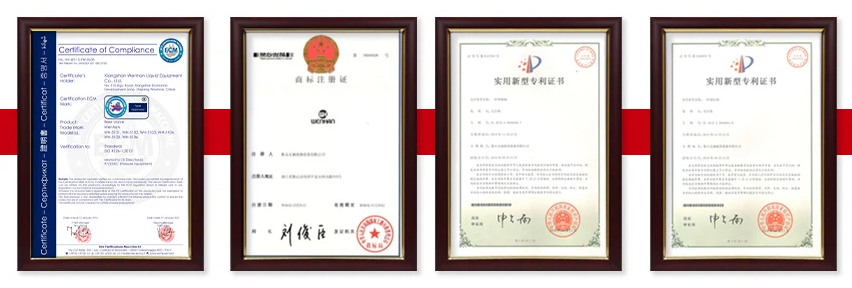
We're well-known as one of the leading sanitary tank component manufacturers and suppliers in China. Our factory offers high quality sanitary tank component made in China with competitive price. Welcome to contact us for wholesale service.
remote control ball valve, watts pressure regulator, lpg gas changeover valves(0/10)



