
Superior hygiene standards
Our products are built to meet strict hygiene standards. Their smooth surfaces and sanitary seals minimize the risk of product contamination, ensuring the integrity and safety of the fluid being processed.
Traceability
It's important to have complete traceability (the ability to track a product's history, origin, materials, and movement throughout its lifecycle) of all components, including valves.
Our factory
Our company has a workshop area of 50,00 square meters and more than 100 employees. In our locations, there are many mature parts supply chains and experienced employees, which makes us unique.
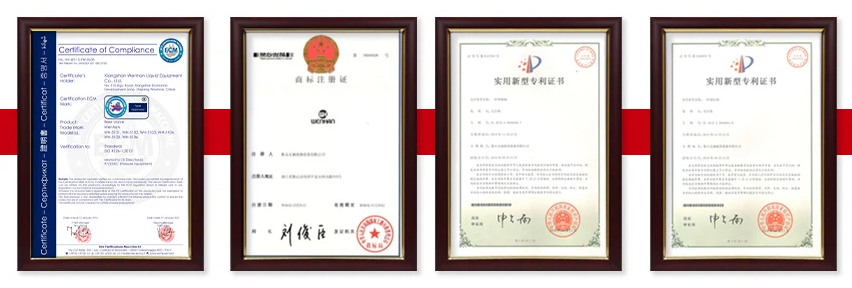
Our certificate
National High-Tech Enterprise, Demonstration unit of double guarantee of quality and reputation, Zhejiang Science and Technology Innovation Enterprise Technology Company,AAA enterprise credit and more than 10 practical patents, In 2013, it was rated as a science and technology enterprise in Zhejiang Province, In 2018, it was rated as a national high-tech enterprise and a double-guaranteed enterprise for quality and reputation, in 2019, it was rated as a national high-tech enterprise and a double-guaranteed enterprise for quality and reputation, Was rated as a national science and technology enterprise and many other honors.
Components of Beer Faucet
Handle/lever
This is the bit you pull to make the beer come out. Every faucet has a different design, but most levers actuate either a forward-sealing or rear-sealing valve that starts and stops the flow of beer. The lever itself is composed of several smaller parts that depend on the overall design of the faucet, while the handle (the tapered black piece) can be removed and replaced with any number of custom pieces. Always pull the handle near its base by placing your thumb on the front and the index and middle fingers on the back and pulling forward. Pulling on a handle from the very top gives much more leverage and can inadvertently damage the faucet!
Faucet body
Fundamentally, this is just a curved piece of metal—stainless steel in this example—that directs the flow of beer into an awaiting piece of stylistically appropriate glassware. At the upstream end, an external thread pattern matches the inner threads on the coupling nut that, when tightened, pulls the faucet against the shank. A circumferential series of teeth mates with an opposing set of teeth on the downstream end of the shank to keep the faucet from freely rotating.
Shank
The shank is a thick, cylindrical chunk of metal with a thread pattern (7/8″-14) on the outside and a bore through the middle. Beer travels through the bore, and the external threads accept a lock nut that keeps everything securely in place. The shank is what connects the room temperature outside world to the refrigerated inner sanctum of keg storage. Shanks come in varying lengths to accommodate everything from the thin shell of a draft tower to the thickest of walk-in cooler walls. The inner bore diameter of 1/4″ or 3/16″ should match the hose barb diameter of the tail piece. The downstream end of a shank may include a small sleeve.
Coupling nut
This holey little ring-shaped widget mates with the thread pattern at the upstream end of the faucet body and ensures a tight seal between the faucet and the shank. Tightening and loosening a coupling nut is best achieved using a special faucet wrench.
Flange
The flange is typically black plastic, but stainless models are also available. It’ s more or less a cosmetic piece that hides the inner workings of the shank and makes it all look nice and tidy. It also has the added benefit of keep the whole thing from falling backward into the refrigerator or draft tower.
Lock nut
This flanged hex nut matches the threads (7/8″-14) on the shank and, when tightened, keeps the shank from falling forward through the wall or draft tower. The lock nut is best loosened and tightened with a 1-3/16″ wrench.
Washer
A small rubber washer creates a tight seal between the business end of the shank and upstream components .
Beer nut
We’ re all beer nuts, right? Well, in this context, a beer nut is a 1″ hex nut with internal threads that tightens onto the end of the shank and secures the tail piece. This is where the rubber meets the road. The beer nut compresses the tail piece against the end of the shank with the washer in between to create a leak-free seal. The tail piece features a hose barb (most commonly 1/4″ and 3/16″) that connects to the beverage line.


Standard draft beer faucets
Standard faucets are perfect for pouring any domestic draft beer, whether you have just a single tap kegerator or a commercial establishment with a wall of taps. You can purchase one and install it without having to buy any additional equipment for your draft system. They connect directly to the shank or draft beer tower and include a ⅜-inch threaded lever that fits virtually any tap handle for easy operation. Standard faucets are available in a variety of materials and finishes, including chrome-plated or polished brass and stainless steel. Since they are used so frequently, replacement parts are very easy to find in case they need to be repaired.
Rear sealing faucets
Most draft faucets you'll find are rear sealing faucets. They control the flow of beer from the back of the faucet as the lever moves a valve shaft inside the faucet body which opens and closes the rear seal. The vents inside the shaft slow the flow of beer to provide a nice, smooth pour. These faucets are easy to disassemble for cleaning purposes. Rear sealing faucets are a cost-effective option versus a forward sealing faucet.
Forward sealing faucets
Forward sealing or ventless draft beer faucet differs from traditional rear sealing faucets in that they greatly reduce the amount of beer that is exposed to oxygen. Instead of a valve shaft controlling the flow at the back of the faucet, the flow is controlled at the front end. This means less beer gets trapped inside the flat area of the faucet body, which keeps your tap handle from sticking and is less susceptible to bacteria and mold growth. Forward-sealing faucets also have fewer internal parts, which means you will spend less time and money on repairing or replacing faucets. Forward sealing faucets tend to pour more quickly than rear sealing ones because the beer does not have to travel through any vents. This creates extra turbulence, which may lead to foamy beer. To help this, many manufacturers offer a flow control model to help consumers slow their pour down.
European draft beer faucets
European beer faucets operate similarly to their standard american counterparts with a few exceptions, the biggest difference being the longer and skinnier spout. The narrow spout reduces the amount of foam you get when pouring, which makes it great for filling growlers and pitchers.
Nitrogen stout draft beer faucets
If you want to serve up any other brew that requires nitrogen or mixed gas for dispensing, you’ ll need a special nitrogen stout beer faucet. The long, narrow design of a stout faucet pairs with a special restrictor disc inside to help power the beer quickly through the faucet, creating the cascading, thick head typically associated with nitro brews. For maximum versatility, you can easily remove the restrictor disc and use this faucet to dispense ‘regular’ co2-powered beers.
Extended spout draft beer faucets
Extended spout faucets, help you control your pour by creating less distance (and thus less loose foam) between the faucet and the glass, pitcher, or growler you’ re trying to fill. The extended spout is also ideal for dispensing wine because the limited drop helps prevent over-oxidation while pouring.
Czech side pull pilsner draft beer faucets
While the ultimate goal of pouring a pint of beer in america is to keep the amount of foam to a minimum, there are parts of the world where a mug of foam would not be angrily slid back to the bartender when presented. A side pull draft beer faucet or czech beer faucet has a trio of micro-filters to control the flow of beer to create a creamy head, which is the traditional way of enjoying a czech pilsner. You submerge the spout in the mug to create a silky, sweet head of foam.
Chrome beer faucet
Chrome-plated brass faucets are the most common style of faucet you will find. The shiny chrome finish is visually appealing, and stands out behind any bar. They are more cost-effective and have the same function as stainless steel, but they don’t hold up well to the wear and tear of long-term continuous use. After years of use and exposure to low-level acidity from both the beer itself and various cleaning agents, a traditional chrome-plated faucet may begin to corrode and impart unwelcome flavors to your brew.If you are building a kegerator for your home or a draft system that won’ t receive a high-level of use, then chrome-plated faucets are still a viable option for you. Just be sure to monitor the level of wear over time.
Stainless steel beer faucet
Stainless steel faucets are an upgrade over the standard option. The added value of having a sturdy stainless steel faucet that will last for many years behind your bar balances the trade-off of the premium cost. Since stainless steel is less susceptible to corrosion it makes it a much more sanitary option because it is much more resistant to the formation of bacteria. For that reason, stainless steel is a must if you want to dispense wine on tap, coffee on tap, kombucha on tap or cocktails on tap because the acidity in these beverages will almost immediately corrode the finish of a plated-brass faucet and render whatever winds up in your glass undrinkable.
Polished brass faucets
If you crave the look of polished brass for your faucets, then you do have options. A polished brass draft faucet offers the same affordability and functionality as its chrome-plated counterpart. You can also get a stainless steel faucet with a tarnish free brass finish that provides the look of brass on the outside, but with the durability of stainless steel on the inside.
Consider your needs
When choosing a beer faucet, it is important to consider your needs. You may want a tap that can fit in your kitchen or bar area or one that has more features. Some features you may want include a digital reader for pouring beer, temperature control, and a keg connection.
Consider the size of the tap
Another important factor to consider is the size of the tap. If you have a small restaurant or bar, you may want a small tap. On the other hand, if you have a larger restaurant or bar, you may want a larger tap.
Consider the style of beer you want to serve
Finally, decide what type of beer you would like to drink. If you are a fan of craft beers, then you may want to look for a craft beer faucet. On the other hand, if you are more interested in popular beers, then you may want to look for a popular beer faucet.
Make use of complementary shades
It is often found that people are more likely to select brands with colorful handle designs when they are faced with unfamiliar brands. Use complementary colors between your beer style and brand to make it stand out. It will be much easier to read the lettering on a white glazed tap handle than on a dark blue glazed tap handle.
Choose a custom, unique shape
Make sure your tap handle stands out from the rest. You can use a unique tap handle to make your brew stand out by integrating it into your brand’ s story. Make sure to design the handle in a way that the tap handles are not wider than 3 inches.
Cleaning and preventing mold
Maintaining a beer faucet involves regular cleaning to prevent mold buildup and off-flavors. Beer faucet parts, especially levers and washers, need to be disassembled and cleaned with a food-grade sanitizer every two weeks. One should also use a faucet brush to scrub the inside surfaces thoroughly. Additionally, faucet caps can be used to cover the spout when not in use, effectively keeping airborne bacteria and mold spores out.
Finding and using replacement parts
When beer faucet parts require replacement, homebrewers, and commercial users must choose compatible and high-quality options. It is beneficial to purchase replacement parts, such as levers or washers, designed specifically for the brand of your draft faucet. For example, one might find specific replacement parts that are ideal for refurbishing their system. Selecting the right replacement parts can extend the life of a draft system and ensure its optimal performance.
Identifying and fixing leaks
Leaks in a draft system can be caused by worn or damaged washers and seals. To fix leaks, one should first identify the origin, whether it's from the shank, lever, or somewhere in the line. Once detected, the faulty part like a washers or broken lever collar should be replaced.
Building your home draft system
When setting up a home draft system, the choice of components is as important as the beer itself. A well-assembled system ensures each pour is of the highest quality, befitting a true home bar enthusiast's standards.
Our company has a workshop area of 50,00 square meters and more than 100 employees. In our locations, there are many mature parts supply chains and experienced employees, which makes us unique. After several years of development, we have a large-scale, high-quality production capacity. Our products are widely used in the dairy, food, beer, beverage, pharmaceutical and cosmetic industries.


We're well-known as one of the leading beer-faucet manufacturers and suppliers in China. Our factory offers high quality beer-faucet made in China with competitive price. Welcome to contact us for wholesale service.
braukmann water pressure regulator, 40 psi water pressure regulator, wilkins br4 pressure regulator(0/10)



