
Superior hygiene standards
Our products are built to meet strict hygiene standards. Their smooth surfaces and sanitary seals minimize the risk of product contamination, ensuring the integrity and safety of the fluid being processed.
Traceability
It's important to have complete traceability (the ability to track a product's history, origin, materials, and movement throughout its lifecycle) of all components, including valves.
Our factory
Our company has a workshop area of 50,00 square meters and more than 100 employees. In our locations, there are many mature parts supply chains and experienced employees, which makes us unique.
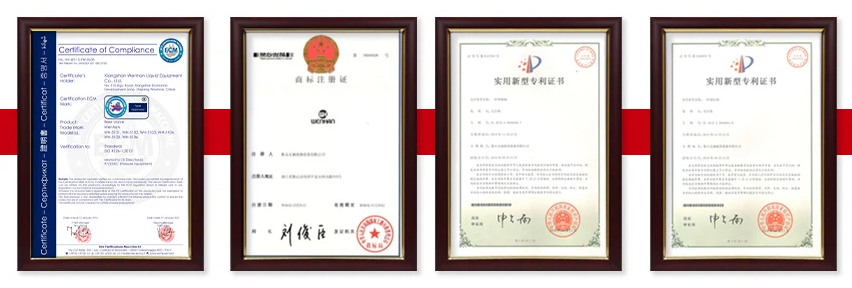
Our certificate
National High-Tech Enterprise, Demonstration unit of double guarantee of quality and reputation, Zhejiang Science and Technology Innovation Enterprise Technology Company,AAA enterprise credit and more than 10 practical patents, In 2013, it was rated as a science and technology enterprise in Zhejiang Province, In 2018, it was rated as a national high-tech enterprise and a double-guaranteed enterprise for quality and reputation, in 2019, it was rated as a national high-tech enterprise and a double-guaranteed enterprise for quality and reputation, Was rated as a national science and technology enterprise and many other honors.
Coupled with the knowledge of how to take a proper sampling coil sample, a lubrication specialist extracting a representative sampling coil sample is only as good as his or her tools. Without these two things, you'll most likely wind up with a non-representative sampling coil sample, which can have detrimental consequences down the road. Using the wrong or inadequate sampling coil sampling hardware, taking sampling coil samples from unsuitable locations, collecting samples incorrectly and even handling the samples improperly can all lead to an sampling coil sample that doesn't represent the true condition of your equipment.
For example, taking an sampling coil sample from the wrong location, such as a point downstream of a filter, won't show an accurate representation of the amount of wear debris or other contaminants in the sampling coil, portraying the sampling coil in the system as clean and eventually resulting in unexpected downtime. Conversely, using the proper sampling coil sampling equipment by installing a correct sampling coil sampling valve where needed and extracting an sampling coil sample there using the proper procedures will cost much less than any error resulting from incorrect sampling.
Proper sampling coil sampling tools are also needed to prevent the sample and the system from being exposed to the ambient air, which contains airborne contaminants like water or particles. Sampling sampling coil without opening the bottle can be done using the right sampling coil sampling hardware. Having a correctly sized and properly cleaned bottle, a zip-lock sandwich bag, the right sampling port and valve, and a sampling device like a vacuum pump are all things you'll need to accomplish this.
Introduction to the Basics of Sampling Coils
The clamp-on dispensing sampling coils have a lot of names; sample sampling coil, pig tail, proof sampling coil, proofing sampling coil. Whatever the name, if your beer is carbonated, you can't simply open up the sample valve or you'll have a cup (or face) full of foam. The pig tail proof sample sampling coil must be used with our lever-style tc sample valve which is available separately. Be aware that there are several designs in the industry for these, each with a different number of "turns" or sampling coils. This particular unit is a 10 turn sampling coil with approximately 5 feet of linear stainless tubing. It will produce a controlled flow on carbonated beers with up to 15 psi behind it. If you run higher pressures, you'll want to seek out a 15 turn sampling coil.
If your beer is carbonated in the unitank or brite tank, you can't just open the sample valve, or you will have a full face of foam. The connecting port is hung on the spiral sampling valve and the plug sampling valve outlet. The inner diameter of the tube is smooth; the sampling valve is opened and flows to the sampling coil of the defoamer. Through the spiral direction of the sampling coil, the gas pressure of beer is reduced. The sample sampling coil must be used with our knob sample valve, which is available separately. Crafted from stainless steel 304, this fitting excels in corrosion resistance and can endure high temperatures, making it an ideal choice for the food, beverage, and dairy industries.
The foam eliminator is used in pressure vessel sampling valve system. The sampling valve is opened and flows tothe sampling coil of the defoamer. Through the spiral direction of the sampling coil, the gas pressure of beer is reduced, and there is little foam in the wine, which can ensure the taste of the wine during sampling and meet the requirements of various production technologies.


Design, fabrication, handling, and treatment of these individual coils affect the long-term reliability of the stator insulation system. Sampling coils are used to check for proper fit of the coils in the stator slots before winding and to check the effectiveness of the stator winding treatment process.
It provides recommendations for testing and inspection of sampling coils to obtain a better quality form-wound stator winding. Coils that are impregnated with a resin using vacuum and pressure cycles in an autoclave device may not achieve full penetration, depending on the number of layers and types of tapes.This guidance is being provided so that coils can be tested and inspected to assess resin penetration and, if possible, allow further processing to improve penetration to provide high-quality coils.
Sampling coils are tools used to give a representation of the coils that will be used to make up a stator winding. In order for sampling coils to provide an accurate indication of the overall stator treatment, sampling coils must be properly designed, fabricated, handled, and processed. Guidance for proper sampling coil inspection, testing, and dissection are provided. The guidance for sampling coil inspection and testing can be used for various types of coils from green (untreated), pretreated, and resin-rich coils. Coil inspection motor sample vacuum pressure impregnation (vpi).
Postponing maintenance and cleaning can have a detrimental impact on process equipment and heating and cooling systems. When dirt and grime coat a chiller’ s or air-conditioner’ s sampling coils, it can drastically increase the costs of running that system. Dirty sampling coils likewise affect critical equipment such as chillers, cooling towers and boilers. If equipment is running harder than it should be because of dirty sampling coils, the undue strain on the system components can lead to costly damage or necessary repairs.
Perhaps even worse, dangerous bacteria can multiply in poorly maintained systems or equipment, posing health risks such as asthma, nausea and more for a facility’ s occupants. The evaporator sampling coil and its condensate pan can become fouled with pollen, mold spores and other biocontaminants. These can have an adverse effect on indoor air quality and even spread to manufactured items. With all the moisture around the evaporator sampling coil, it can become a breeding ground for bacteria and mold. The benefits of clean sampling coils include energy savings, maximum heat transfer, system longevity and improved air quality.
Plenty of tools only require simple training. Advancements in technology and design have helped to make sampling coil cleaning easier and less time-consuming. The equipment lends itself to increased portability for smaller spaces. It is important to make sure you are investing in the right equipment for your maintenance needs. Take the time to speak with the manufacturers of the products you are researching. They can suggest features that will make sampling coil cleaning easier and more effective. Look for a sampling coil-cleaning system that uses an appropriate amount of water pressure to remove the dust and debris from evaporator and condenser sampling coils. While pressure washers are one of the more common methods, they can do more harm than good if their excessive pressure damages the sampling coil’ s delicate fins.
When cleaning indoor sampling coils, use tools designed for minimal yet sufficient pressure. Limiting the amount of water and chemical used will ensure you do not overwhelm condensate lines. On outdoor sampling coils, use a combination of lower pressure and high water volume to thoroughly clean sampling coils. Finding the right sampling coil-cleaning chemical is just as important. Acid cleaners are unsafe for workers, destructive to sampling coils and other components, and not environmentally friendly.
Our company has a workshop area of 50,00 square meters and more than 100 employees. In our locations, there are many mature parts supply chains and experienced employees, which makes us unique. After several years of development, we have a large-scale, high-quality production capacity. Our products are widely used in the dairy, food, beer, beverage, pharmaceutical and cosmetic industries.


We're well-known as one of the leading sampling coil manufacturers and suppliers in China. Our factory offers high quality sampling coil made in China with competitive price. Welcome to contact us for wholesale service.
compressor pressure regulator valve, 1pc ball valve, inline pressure reducing valve(0/10)



